
top mounted hydraulic breakers manufacturers & suppliers
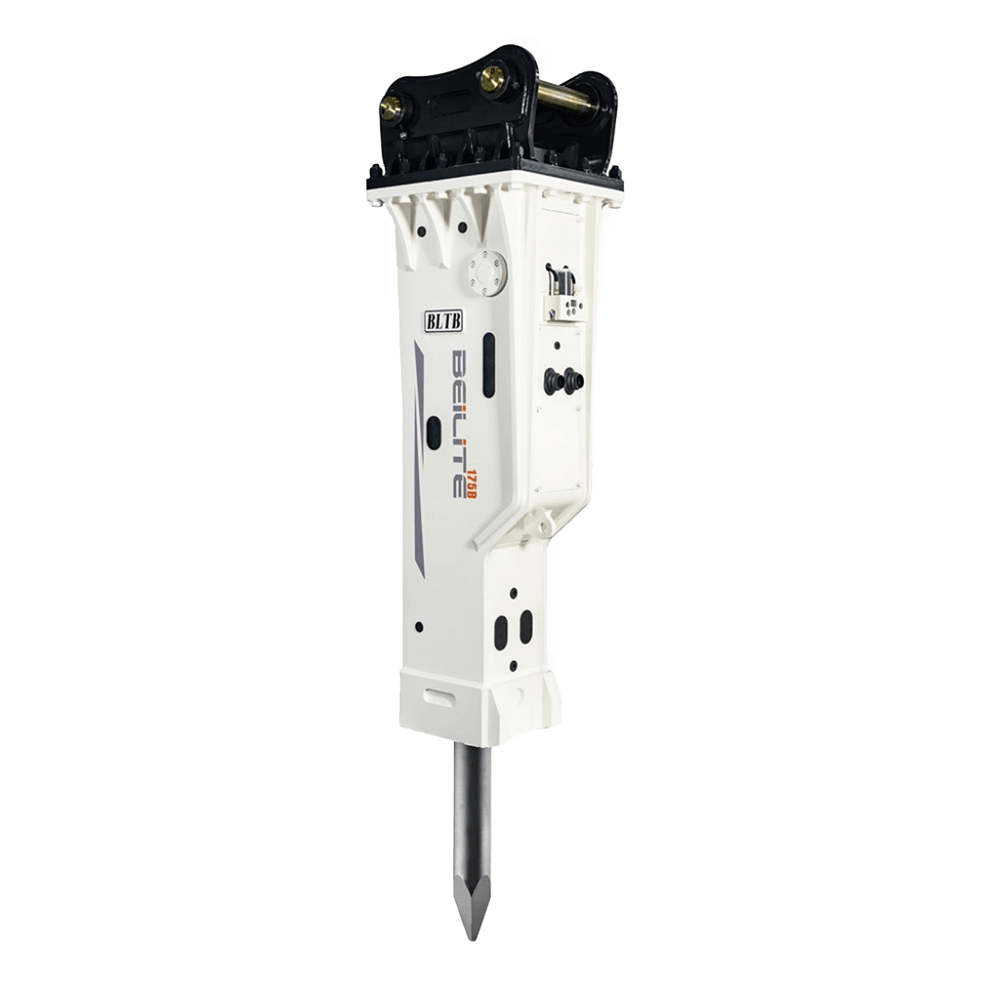
Are you looking for a high-performance top-mounted hydraulic breaker? Our heavy-duty excavator breakers are specifically designed for demanding applications. Whether for secondary crushing, quarrying, or large-scale demolition, they deliver exceptional impact energy and reliability. The top-mounted design offers significant mechanical advantages during vertical operations and deep trench excavation, making it the ideal choice for companies seeking high productivity.
top mounted hydraulic breakers
Designed specifically for heavy-duty applications and equipped with an intelligent hydraulic control system, it delivers higher impact frequencies and lower maintenance costs. Make every crushing operation a stepping stone to increased profits.
Why You Should Trust BEILITE
designed to withstand extreme impacts
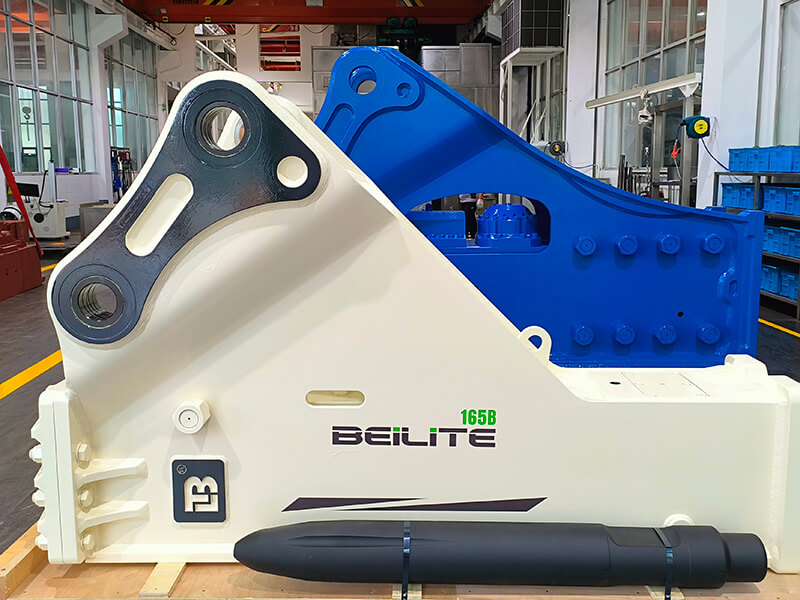
Our top-mounted hydraulic breakers are specifically designed to withstand the most demanding working conditions. By utilizing advanced heat treatment processes and high-quality alloy steel, we ensure that every strike delivers exceptional impact energy. When you choose BEILITE, you’re selling more than just a tool—you’re selling reliability.
OEM and Private-Label Services
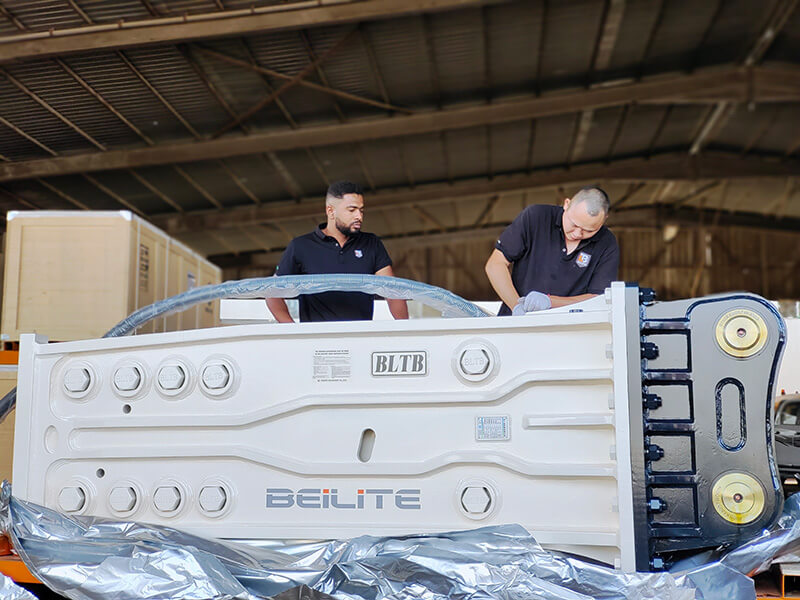
EILITE maintains a strategic inventory of critical wear parts, including diaphragms, pistons, and seal kits. Our efficient logistics network ensures that spare parts are delivered quickly to your local market, enabling you to provide exceptional after-sales support to your customers and secure a steady source of revenue.
The ultimate choice for efficient demolition work
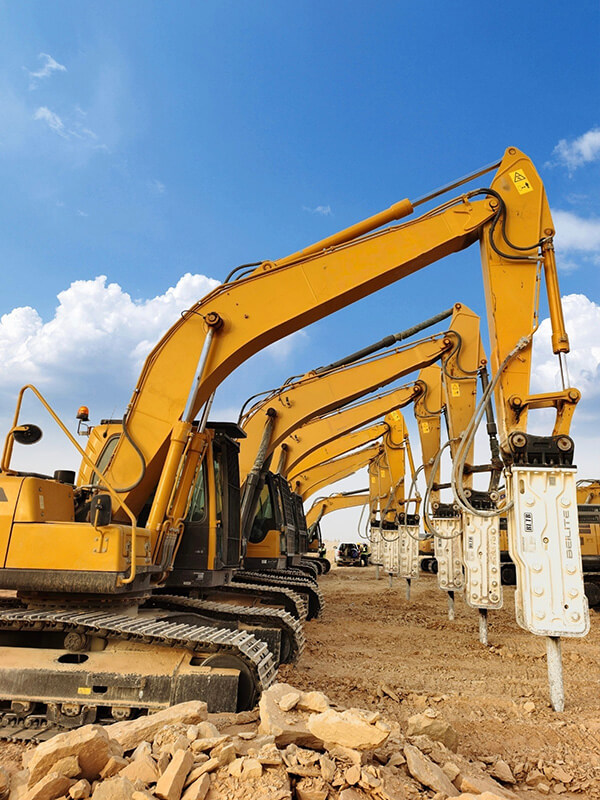
The BEILITE roof-mounted hydraulic breaker is designed specifically for operators who require a wider working range and uncompromising power. Featuring a streamlined design, this series offers excellent visibility, a wider working angle for high-altitude tasks, and maximizes impact efficiency through direct power transmission.
clear field of view, flexible tilt angle
By eliminating the bulky side-mounted bracket, it provides the operator with a clear, unobstructed view of the work area. This design offers a wider range of tilt angles, enabling efficient operation in narrow trenches and tight corners where side-mounted equipment falls short. Our rugged mounting system is compatible with a wide range of excavator models, ensuring a secure installation and seamless integration, making it an ideal upgrade for any fleet.
direct power, ultimate efficiency
BEILITE’s advanced hydraulic circuit delivers exceptional energy efficiency. Our top-mounted design minimizes pressure loss, ensuring that maximum kinetic energy is transferred directly to the rock. With adjustable frequency settings and precise flow control, operators can tailor the breaker’s performance to the hardness of the material—achieving fast demolition speeds while protecting the host machine’s hydraulic system from backpressure damage.
sturdy and durable, built to last
At BEILITE, durability is non-negotiable. Every hydraulic breakers is equipped with a precision-machined piston made of high-quality alloy steel and undergoes rigorous heat treatment to enhance fatigue resistance. Our patented sealing technology effectively prevents dust intrusion and hydraulic leaks, ensuring reliable operation even in the harshest quarry environments. By eliminating wear on the outer side plates, the core structure is effectively protected.
protected operations
Safety is built into every piece of equipment. BEILITE hydraulic breakers are equipped with noise-reducing housings and vibration-isolation systems to reduce operator fatigue and minimize environmental impact. The integrated anti-cavitation system prevents accidental activation when the breaker is not in contact with the workpiece, thereby protecting the breaker’s internal components and ensuring a safe working environment. The unobstructed field of view further enhances safety on the construction site.
FAQ
Q: What is a top-mounted hydraulic breaker?
A: Top-mounted hydraulic breaker, also known as a top breaker, is an attachment installed at the end of an excavator’s boom. It uses the hydraulic power provided by the host machine to generate repeated, high-energy impacts, thereby breaking up concrete, rock, and other hard materials. The “top-mounted” design refers to its vertical, streamlined structure, which provides excellent visibility and is widely used in general construction and earthmoving applications.
Top-mounted hydraulic breakers play a crucial role in construction, demolition, mining, and infrastructure projects. From breaking up reinforced concrete and asphalt to crushing large boulders in quarries and excavation sites, these powerful attachments can significantly improve work efficiency and productivity. Their ability to deliver high impact force with precision makes them indispensable tools for contractors who require reliable performance in demanding environments.
Q: How do I know if a hydraulic breaker is compatible with my excavator?
A: There are four key parameters to verify: your excavator’s operating weight, auxiliary hydraulic flow output (GPM/LPM), auxiliary circuit operating pressure (PSI/Bar), and stick mounting configuration (pin-to-pin distance and pin diameter). All of these specifications can be found in your excavator’s operator manual or obtained from your excavator dealer. Share these figures with your breaker manufacturer or dealer, and they will be able to confirm compatibility or recommend the most suitable model for your machine.
regional parts warehouses
On a construction site, time is money. Through our strategically located regional parts warehouses around the world, we guarantee that critical replacement parts will arrive at your site within 48 hours. No more lengthy international shipping delays—just fast, reliable parts delivery to keep your project on track.
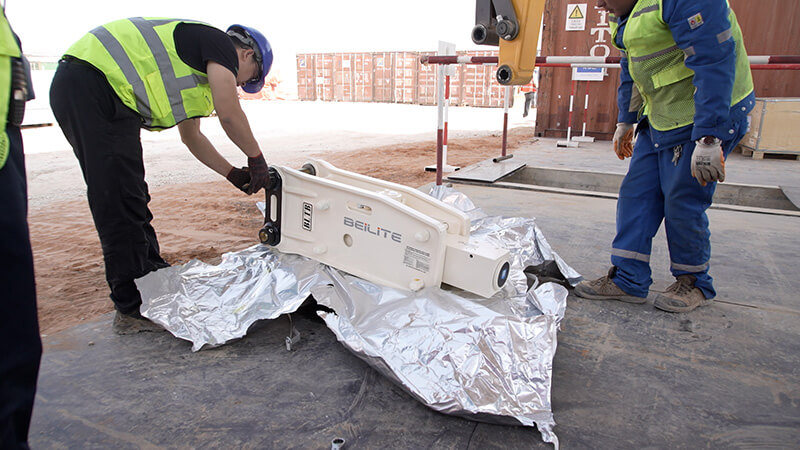
ultimate guide to purchasing top mounted hydraulic breakers
BEILITE will help you comprehensively evaluate key factors—such as the specifications of the host machine, its intended use, and your available budget—so you can make an informed decision. By taking all these factors into account, you can confidently choose a top-mounted hydraulic breaker that not only delivers outstanding performance and durability but also offers exceptional value for your money.
Design Features
Although there are currently three common types of hydraulic breakers on the market, top-mounted breakers remain the most popular choice among professional operators, and there are very sound engineering reasons for this.
The operating principle of this top-mounted design is the simplest and most mechanically efficient among hydraulic breakers to date. Unlike other designs that route hydraulic pressure around or to the side of the piston, the entire control valve and drive assembly are located directly above the impact piston. Once activated, the hydraulic drive piston moves along a straight, vertical path, with no force deflection or change in direction occurring at any stage of the impact cycle.
How to choose the right top mounted hydraulic breaker
Selecting the right top-mounted hydraulic breaker requires a careful evaluation of several interrelated factors. Making a hasty decision or focusing solely on price are the most common mistakes. Below, BEILITE will walk you through each key consideration one by one.
Carrier Compatibility
It is crucial to ensure that the hydraulic breaker is properly matched to the carrier equipment. Before making a purchasing decision, you must verify the following four specific compatibility parameters.
Excavator Weight Classes and Operating Weight Limits
Every hydraulic breaker manufacturer publishes the recommended carrier weight range for each breaker model. This range is not merely a suggestion—it is an engineering design limit. Generally, the weight of the breaker should not exceed 10% of the excavator’s operating weight.
Auxiliary Hydraulic Flow Requirements (GPM/LPM)
Hydraulic breakers are powered entirely by the excavator’s auxiliary hydraulic circuit. Each breaker model requires a specific hydraulic flow range (measured in gallons per minute (GPM) or liters per minute (LPM)) to operate properly.
Operating Pressure Specifications (PSI/Bar)
In addition to flow, the excavator’s auxiliary circuit must also provide hydraulic pressure within the breaker’s specified operating range, measured in pounds per square inch (PSI) or bar (bar).
Mounting Methods: Pin-Type and Quick-Coupler
Finally, confirm how the breaker will be physically connected to the excavator’s boom. Traditional pin-type mounting uses fixed mounting pins, which must match the pin center distance and pin diameter of the excavator’s boom—these dimensions must align perfectly. If your excavator is equipped with a hydraulic quick-coupler, you’ll need to verify that the breaker’s mounting bracket is compatible with that specific quick-coupler model.
Carrier Compatibility
Top-mounted hydraulic breakers are installed directly at the end of an excavator’s boom. The intense reaction forces and high-frequency vibrations generated during operation are transmitted entirely to the mounting bracket system.
Check whether the mounting bracket is designed with reinforcing plates. Does the pin mounting method incorporate a reliable anti-backout locking mechanism? A mounting bracket with insufficient torsional resistance is prone to deformation during prolonged hard rock breaking operations, which can cause the breaker to become loose.
Upper Cylinder Block Protection and Sealing
Flying debris and dust at the site are the number one threat to hydraulic crushing cylinders, especially for overhead installations that are positioned high up and directly exposed to falling rocks.
The thickness and coverage of the upper cylinder housing guard (steel shield) are critical. Do not judge it solely on the appearance of the protective mesh. It must effectively block direct impacts from large rock fragments. At the same time, the upper dust-sealing system must be airtight to prevent fine dust from entering the piston chamber, which could cause cylinder scoring or hydraulic oil contamination.
Upper Cylinder Block Protection and Sealing
Flying debris and dust at the site are the number one threat to hydraulic crushing cylinders, especially for overhead installations that are positioned high up and directly exposed to falling rocks.
The thickness and coverage of the upper cylinder housing guard (steel shield) are critical. Do not judge it solely on the appearance of the protective mesh. It must effectively block direct impacts from large rock fragments. At the same time, the upper dust-sealing system must be airtight to prevent fine dust from entering the piston chamber, which could cause cylinder scoring or hydraulic oil contamination.
Versatility of Mounting Brackets
Ceiling-mounted brackets are typically classified as “dedicated” or “universal.” Dedicated brackets offer the best stability, but universal brackets (by replacing different pin sockets or adapter plates) can accommodate excavators of different brands and tonnages. If you have a diverse fleet of equipment, you should prioritize universal brackets with a modular design.
Excessive Consumption of Lifting Torque
Typically, the weight of the top-mounted breaker should be 60%–90% of the excavator’s bucket weight. The thrust provided by the excavator’s hydraulic system to the dipper cylinder and the lifting force of the boom are limited; improper selection can consume a significant portion of the lifting torque.
Cost Considerations
Cost is undoubtedly an important factor in any capital equipment decision, but the key is to evaluate the total life-cycle cost, not just the purchase price. A top-mounted crusher that is cheaper but requires frequent replacement of seals, rapidly wears out tools, or causes accelerated wear on the host equipment will almost always incur higher total costs over its service life than a higher-quality machine with a higher initial price.
conclusion
Selecting the right top-mounted hydraulic breaker is not simply a matter of choosing a model that fits your budget — it is about ensuring the breaker is properly matched to your carrier machine, hydraulic system, and primary application. Excavator weight class, hydraulic flow and pressure, impact energy, tool configuration, and protective features must all work together as a balanced system.
Choose BEILITE: Reliable Manufacturer
Since every job site and carrier configuration is unique, the most reliable way to make the right investment decision is to consult with an experienced manufacturer. Our engineering and sales teams work closely with contractors, fleet managers, and equipment dealers to jointly evaluate carrier specifications, application requirements, and budget considerations. Based on this information, we can recommend the most suitable breaker size, tool configuration, and optional features to ensure you achieve optimal performance and return on investment.
If you are considering purchasing a top-mounted hydraulic breaker, please feel free to contact us for a personalized consultation. Please provide your excavator model, hydraulic specifications, and primary application scenarios, and BEILITE’s experts will recommend the most efficient and cost-effective solution for you. Let us help you choose a breaker that delivers powerful performance, reliable operation, and long-term value for every job.
Table of Contents
ARTICLES AND PURCHASE RESOURCES
How to choose the right size Boleo compact excavator
When choosing a Boleo compact excavator, consider factors such as the work site, digging depth and load capacity to ensure equipment efficiency and safety
Transporting your Boleo compact excavator correctly
Protect your investment and reduce transport risk by choosing the right trailer to load and secure your Boleo excavator correctly
How to choose the right size Boleo compact excavator
Efficient and safe operations in confined spaces by taking into account the operating environment, equipment flexibility and operating skills