
hydraulic breakers maintenance
BEILITE has compiled practical tips for maintaining hydraulic breakers. The company committed not only to manufacturing durable equipment but also to ensuring that you maximize the value of every investment you make.
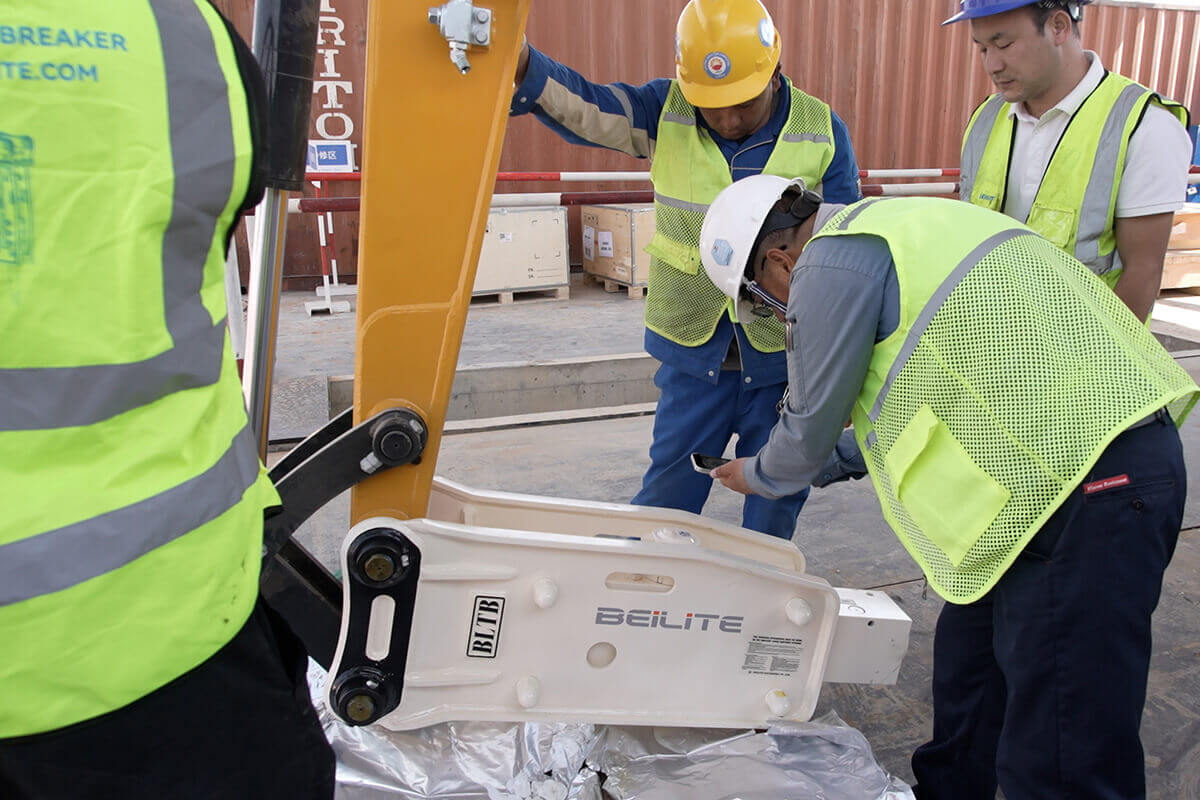
Hydraulic breakers are the most reliable tools for mining, road construction, and demolition work. Many factors can cause wear and tear, such as high-temperature hydraulic oil, dust ingress, and metal fatigue. These conditions happen every day.
It’s not optional to take care of them. Regular maintenance is important for more reasons than just saving money. A regular maintenance schedule helps keep the job site safe and makes sure projects stay on schedule.
We provide you with manuals that explain how to take care of your equipment, replacement parts, and technical support.
Reliable Maintenance Solutions for Hydraulic Breakers
Check and maintain oil level
Check and maintain oil level
Check and maintain oil level
As leaders in demolition and mining operations, hydraulic breakers are consistently utilized in the most challenging and demanding environments. The intense, high-frequency vibrations and strong recoil they experience necessitate more thorough and systematic maintenance.
Regular cleaning, lubrication, and inspections are not only essential for maintaining the equipment’s appearance but also for maximizing returns, extending the lifespan of your assets, and ensuring complete safety on the job site.
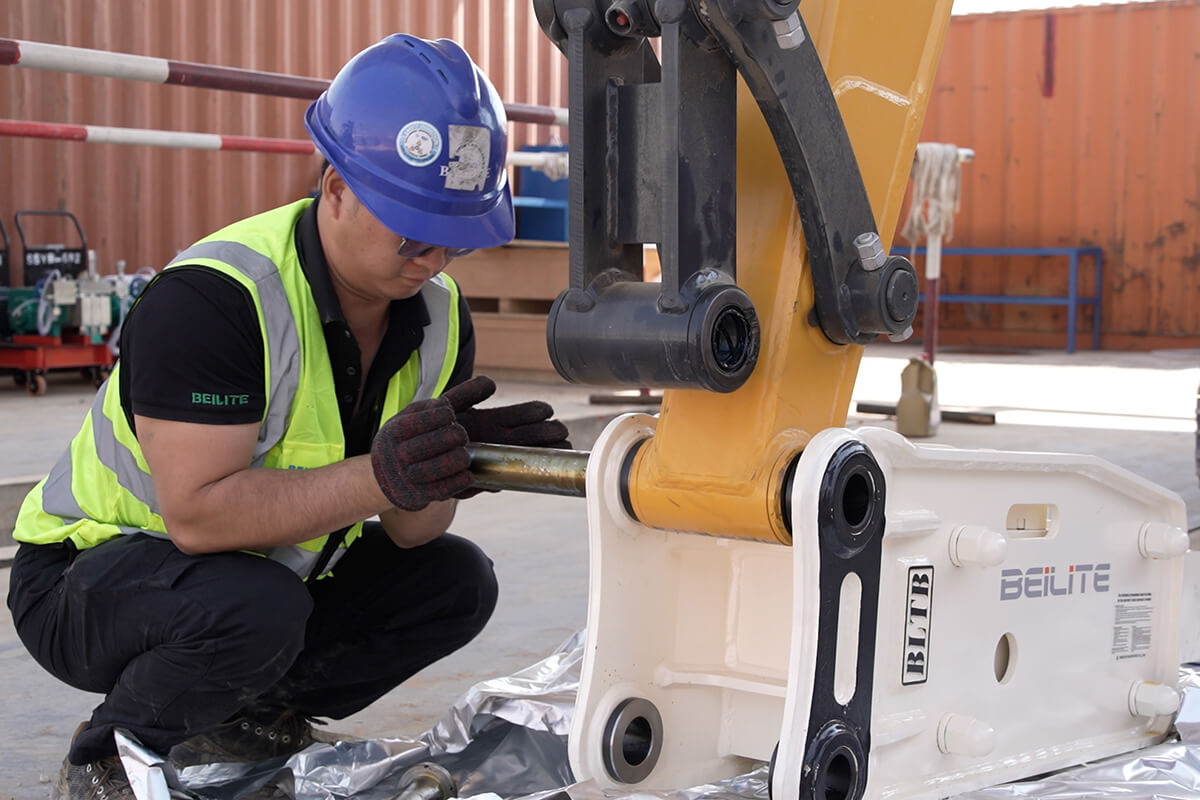
Reliable Uptime, Eliminating Unplanned Downtime
Eliminating Unpredictable, High Overhaul Costs.
Achieve peak performance by maintaining powerful striking strength.
Prolong the Service Life of Both the Breaker and the Excavator.
Eliminate Unforeseen Risks on the Construction Site
In the engineering industry, time is money, and uptime translates to profit. The greatest value of a preventive maintenance program is its ability to shift the focus from “emergency repairs after a breakdown” to “scheduled and controlled maintenance.”
A hydraulic breaker that is rigorously maintained following scientific protocols can operate reliably for thousands of hours during intensive rock breaking and road crushing operations, minimizing unexpected downtime and ensuring your project schedule remains fully on track.
hydraulic breakers maintenance tips
Daily Maintenance
- Before Operation: Check bolts, hydraulic hoses, fittings, pins, and the tool for looseness, leaks, wear, or cracks.
- During Operation: Monitor for abnormal oil leakage and maintain the hydraulic oil level as required.
- After Operation: Clean debris from the tool and bushings, then check hydraulic oil temperature, level, and condition. Replace the filter if the oil is dark or cloudy.
Lubrication
- Frequency: Grease every 2–4 operating hours, or at least twice daily. Increase frequency in harsh conditions.
- Position: Press the breaker vertically against the ground before greasing.
- Warning: Never grease with the breaker suspended or the chisel hanging, as grease may enter the impact chamber and damage seals or contaminate hydraulic oil.
Replacing Chisels and Bushings
- Check Clearance: Measure the clearance between the drill rod and bushing. Replace the bushing or rod when clearance exceeds 8–10 mm.
- Inspect Regularly: During maintenance, measure the bushing inner diameter and rod outer diameter with a vernier caliper.
- Replace if Damaged: Stop operation and replace the rod if severe pitting, spalling, or cracks are found.
Check the nitrogen pressure
- Check Monthly: Inspect the nitrogen chamber and accumulator every month or 100 operating hours using a dedicated pressure gauge.
- Signs of Low Pressure: Reduced impact power, weak breaking performance, or increased vibration may indicate low nitrogen pressure.
- Use Proper Nitrogen: Fill only with 99.9%+ industrial nitrogen. Never use oxygen, flammable gases, or compressed air due to explosion risk.
Change the Hydraulic Oil
- Temperature: Maintain hydraulic oil at 50–80°C. Stop operation if it overheats and allow the system to cool.
- Filter: Replace the return filter every 250 hours.
- Hydraulic Oil: Replace every 600–800 hours due to increased heat and vibration.
- Filtration: Maintain hydraulic filtration at ≤10 μm.